
MINI SPLIT ERROR CODES GUIDE
Complete HVAC Troubleshooting Newsletter
INTRODUCTION
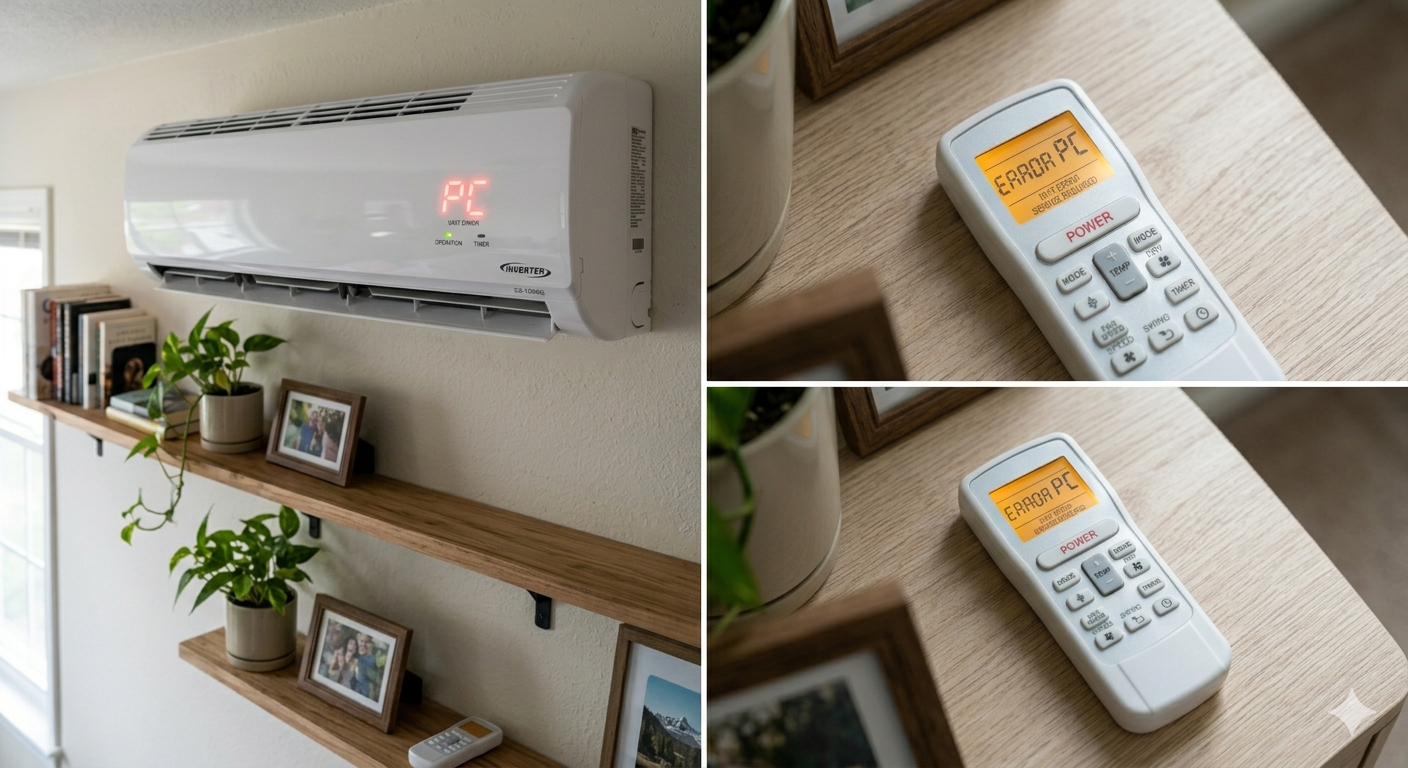
If your mini split air conditioner is displaying an error code, this guide will help you understand what’s happening. These codes assist in identifying system issues, but proper diagnosis is always required.
This guide is designed for homeowners, HVAC technicians, and maintenance professionals.
FULL MINI SPLIT ERROR CODES LIST
|
**Error Code |
Description** |
|
EC07 |
ODU fan speed is out of control. When indoor/outdoor fan speed remains too low or too high for a certain time, the unit stops and displays the error. |
|
EC0D |
Outdoor unit malfunction. The indoor unit detects an error in the outdoor unit. |
|
EC50 |
ODU temperature sensor error (T3, T4, TP). Open or short circuit. Voltage <0.06V or >4.94V triggers fault. |
|
EC51 |
ODU EEPROM parameter error. PCB does not receive feedback from EEPROM chips. |
|
EC52 |
ODU coil temperature sensor (T3) error. Open or short circuit. |
|
EC53 |
ODU ambient temperature sensor (T4) error. Open or short circuit. |
|
EC54 |
Compressor discharge temperature sensor (TP) error. Open or short circuit. |
|
EC55 |
ODU IPM module temperature sensor malfunction. |
|
EC56 |
IDU coil outlet temperature sensor (T2B) error (multi-zone). |
|
EC57 |
Refrigerant pipe temperature sensor error. |
|
ECC1 |
Refrigerant leakage detected (multi-zone). Alarm may sound from the detecting unit. |
|
EC5A |
Enthalpy inlet temperature sensor failure. |
|
EC5B |
Enthalpy outlet temperature sensor failure. |
|
EC5E |
Condenser temperature sensor (T3B) failure. |
|
EC5C |
Pressure sensor failure (abnormal voltage). |
|
EC71 |
Overcurrent failure of outdoor DC fan motor. |
|
EC72 |
Lack phase failure of outdoor DC fan motor. |
|
EH00 |
IDU EEPROM malfunction. |
|
EH02 |
Zero-crossing signal detection error / communication issue. |
|
EH03 |
Indoor fan speed out of control. |
|
EH0A |
IDU EEPROM parameter error. |
|
EH0B |
Communication error between indoor main board and display board. |
|
EH0E |
Water-level alarm malfunction. |
|
EH3A |
Low voltage protection of indoor external fan DC bus. |
|
EH3B |
External fan DC bus voltage too high. |
|
EH60 |
Room temperature sensor (T1) error. |
|
EH61 |
Indoor coil temperature sensor (T2) error. |
|
EH62 |
Evaporator inlet temperature sensor (T2B) error. |
|
EH66 |
Evaporator inlet temperature sensor (T2B) error (duplicate code variant). |
|
EH65 |
Evaporator coil temperature sensor (T2A) error. |
|
EHBA |
Communication error between indoor unit and external fan module. |
|
EHC1 |
Refrigerant leakage detected (≥10% LFL). |
|
EHC2 |
Refrigerant sensor out of range with leakage detected. |
|
EHC3 |
Refrigerant sensor out of range / no feedback. |
|
EH12 |
Twin system error. One indoor unit indicates another unit is faulty. |
|
EH31 |
Indoor fan (1) speed malfunction. |
|
EH32 |
Indoor fan (2) speed malfunction. |
|
EL01 |
Communication error between indoor and outdoor units. |
|
EL0C |
Refrigerant leak detected. |
|
EL16 |
Adapter board and outdoor main board communication error. |
|
EL11 |
Communication error between main and secondary units. |
|
FHCC |
Refrigerant sensor error. |
|
FL09 |
Indoor and outdoor unit platform mismatch. |
|
FH07 |
Communication error between indoor unit and lifting panel. |
|
PC00 |
IPM module protection (abnormal voltage). |
|
PC01 |
Low ambient temperature or voltage protection. |
|
PC02 |
Compressor/IPM high temperature protection. |
|
PC03 |
High/low pressure protection. |
|
PC04 |
Inverter compressor drive error. |
|
PC0L |
Low ambient temperature protection. |
|
PC06 |
Compressor discharge temperature protection. |
|
PC08 |
Outdoor overcurrent protection. |
|
PC0A |
Condenser high temperature protection. |
|
PC0F |
PFC module malfunction. |
|
PC10 |
Low AC voltage protection. |
|
PC11 |
High DC bus voltage protection. |
|
PC12 |
Low DC bus voltage protection. |
|
PC13 |
AC power cut off or detection circuit failure. |
|
PC30 |
System high pressure protection. |
|
PC31 |
System low pressure protection. |
|
PC40 |
Communication error between ODU chips. |
|
PC41 |
The compressor starts failing. |
|
PC42 |
Compressor phase loss protection. |
|
PC43 |
Abnormal phase current protection. |
|
PC44 |
Zero speed protection. |
|
PC45 |
IR chip drive failure. |
|
PC46 |
Compressor speed out of control. |
|
PC49 |
Compressor overcurrent failure. |
|
PCA1 |
Refrigerant pipe condensation protection. |
|
FH0P |
AP mode without WiFi adapter. |
|
dF |
Defrost mode (normal). |
|
CL |
Self-cleaning mode. |
|
FP |
Heating below 8°C. |
|
FC |
Forced cooling mode. |
|
AP |
WiFi AP mode. |
|
CP |
Remote switched off. |
|
nA |
No malfunction. |
|
LC06 |
Inverter module high temperature protection. |
|
PH90 |
Evaporator high temperature protection. |
|
PH91 |
Evaporator low temperature protection. |
|
E0 |
Indoor EEPROM parameter error. |
|
E1 |
Communication or room sensor error (multi-zone). |
|
E2 |
Zero-crossing or outdoor coil sensor failure. |
|
E3 |
Indoor fan speed or coil sensor failure. |
|
E4 |
Room temperature sensor (T1) error. |
|
E5 |
Evaporator coil temperature sensor (T2) error. |
|
E8 |
Communication error. |
|
EC |
Refrigerant leakage detection. |
|
F0 |
Current overload or outdoor fan failure. |
|
F1 |
Outdoor ambient sensor (T4) error. |
|
F2 |
Condenser coil sensor (T3) error. |
|
F3 |
Discharge temperature sensor (TP) error. |
|
F4 |
Outdoor EEPROM error. |
|
F5 |
Outdoor fan speed issue. |
|
F6 |
Sensor voltage abnormal. |
|
F7 |
Indoor PCB not receiving panel signal. |
|
F8 |
Panel not operating. |
|
F9 |
Cassette panel not closing. |
|
FA |
Suction temperature sensor fault. |
|
H1 |
Drainage fault. |
|
H2 |
Indoor communication failure. |
|
H3 |
Indoor liquid pipe temperature sensor failure. |
|
H4 |
Indoor gas pipe temperature sensor failure. |
|
H5 |
Low discharge temperature protection. |
|
H6 |
Low pressure switch protection. |
|
H7 |
Low pressure protection. |
|
H8 |
Four-way valve fault. |
|
H9 |
Communication line fault. |
|
L0 |
DC voltage failure. |
|
L1 |
Compressor overcurrent protection. |
|
L2 |
Compressor step failure. |
|
L3 |
Compressor phase loss. |
|
L4 |
IPM module failure. |
|
L5 |
PFC hardware overcurrent protection. |
|
L6 |
PFC software overcurrent protection. |
|
L7 |
Current detection is abnormal. |
|
L8 |
Compressor overload protection. |
|
L9 |
IPM temperature sensor failure. |
|
LA |
Compressor startup failure. |
|
LC |
PFC current detection error. |
|
LD |
DC fan current abnormal. |
|
LE |
DC fan phase loss. |
|
LF |
DC fan out of step. |
|
LH |
DC fan IPM protection. |
|
P0 |
IPM or IGBT overcurrent protection. |
|
P1 |
Voltage protection. |
|
P2 |
High temperature protection. |
|
P3 |
Low outdoor temperature protection. |
|
P4 |
Compressor drive error. |
|
P5 |
Mode conflict. |
|
P6 |
Pressure protection. |
|
P7 |
Anti-freezing protection. |
TROUBLESHOOTING STEPS
- Identify the error code
• Check sensors and wiring
• Inspect airflow and filters
• Reset the system if needed
• Contact a licensed HVAC technician
COMMON CAUSES
- Faulty sensors
• Refrigerant leaks
• Electrical issues
• Communication failures
• Poor maintenance
IMPORTANT DISCLAIMER
The error codes listed in this document are for informational purposes only and do NOT indicate that any specific part must be replaced.
Accurate diagnosis requires proper tools and professional expertise. Always have systems inspected and repaired by a licensed HVAC technician.
HVAC Express Parts is not responsible for any damage or repairs made based on this information.
NEED PARTS?
Visit hvacexpressparts.com for sensors, boards, motors, and more.