
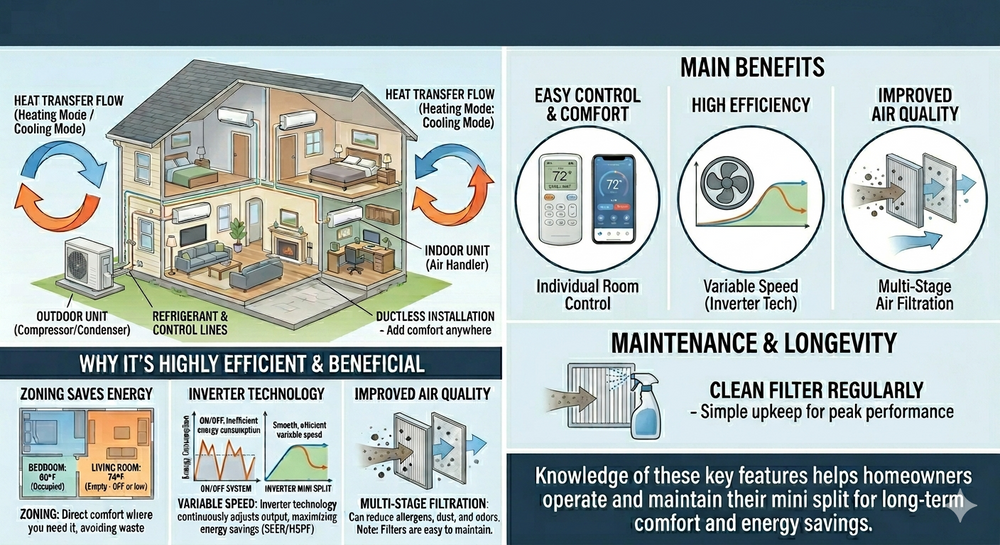
Mini Split AC Units: Parts and Components Explained (Complete Guide)
Mini split air conditioning systems—also known as ductless AC systems—are one of the most efficient ways to heat and cool a home. Whether you're upgrading your HVAC system or just want to understand how it works, knowing the key components of a mini split system can help you make smarter decisions and maintain it properly.
In this guide, we’ll break down every major part of a mini split AC unit in simple terms.
What Is a Mini Split AC System?
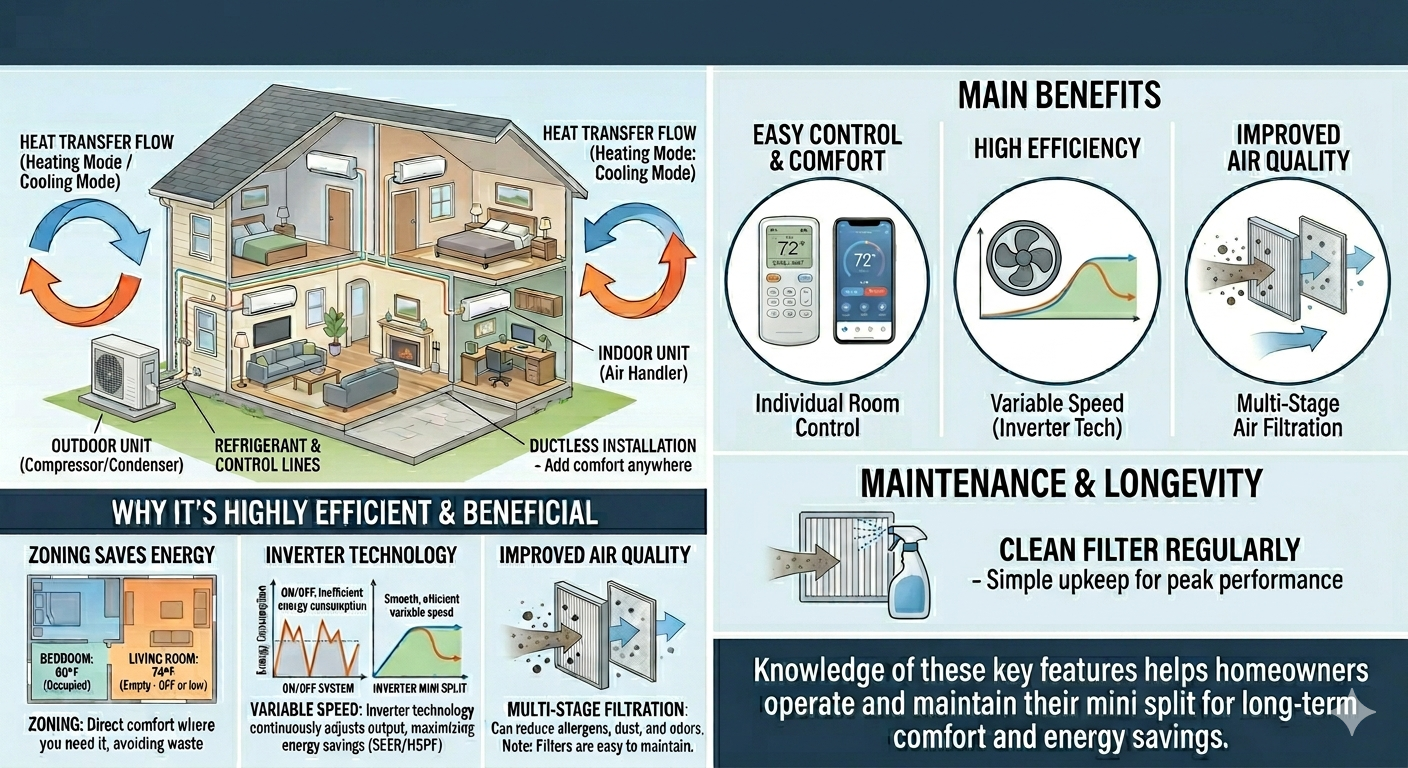
A mini split system is a ductless heating and cooling system made up of two main parts:
- An indoor unit (air handler)
- An outdoor unit (condenser)
These units work together using refrigerant lines to transfer heat in and out of your home.
1. Indoor Unit
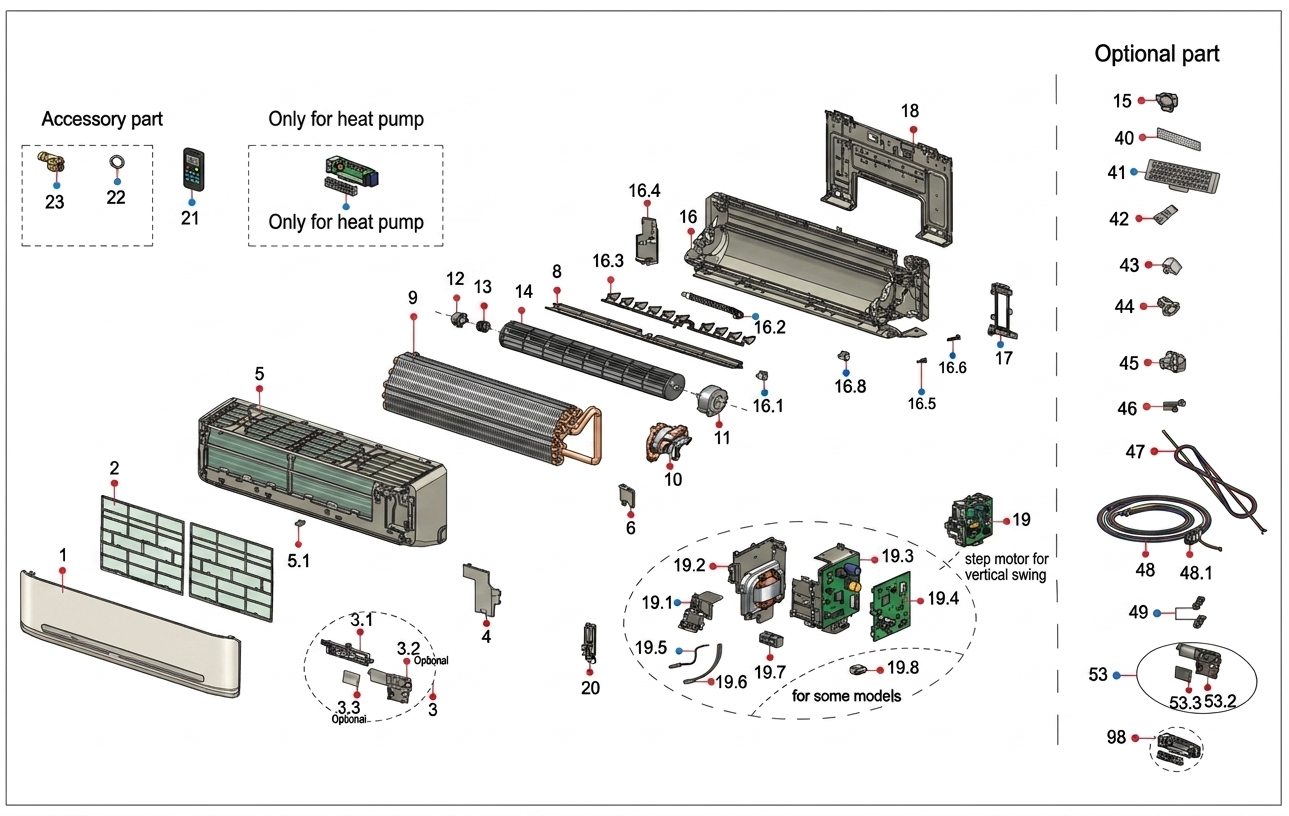
The indoor unit is installed inside your room, usually mounted on a wall. This is the part that blows cool (or warm) air into your space.
Key Components:
- Evaporator Coil: Absorbs heat from indoor air
- Blower Fan: Circulates air throughout the room
- Air Filter: Removes dust, allergens, and debris
- Louvers: Direct airflow where needed
? Pro Tip: Clean the air filters every 2–4 weeks for best performance.
2. Outdoor Unit (Condenser)
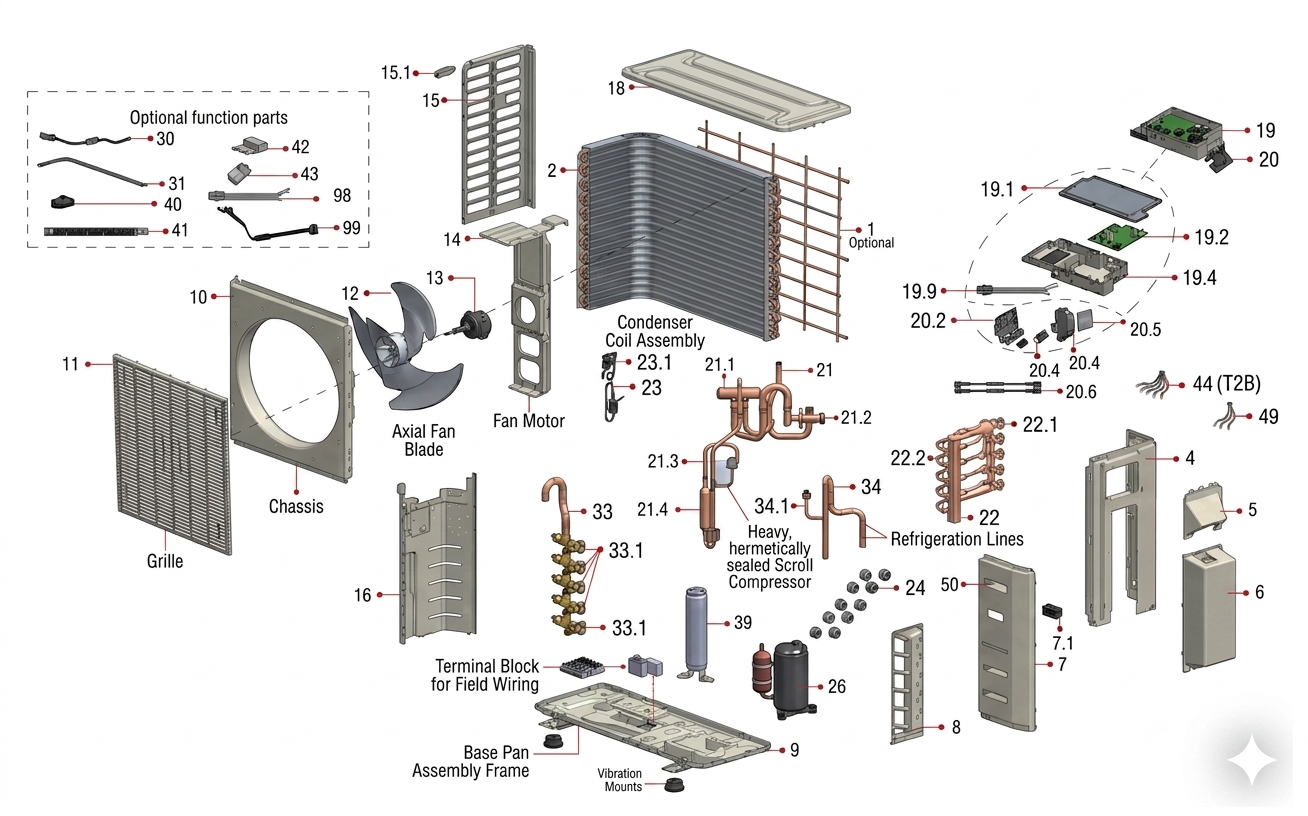
The outdoor unit is installed outside your home and is responsible for releasing or collecting heat.
Key Components:
- Compressor: The heart of the system that moves refrigerant
- Condenser Coil: Releases heat outside
- Fan: Helps cool the condenser coil
- Expansion Valve: Controls refrigerant flow
3. Refrigerant Lines (Line Set)
These copper pipes connect the indoor and outdoor units.
- Liquid Line: Sends refrigerant to the indoor unit
- Suction Line: Returns refrigerant to the compressor
4. Refrigerant
Refrigerant is the substance that absorbs and releases heat as it cycles through the system.
Modern systems use more environmentally friendly refrigerants like R-410A, R32, R454B or newer alternatives.
5. Drain Line (Condensate Drain)
As your AC cools the air, it also removes humidity. That moisture is drained away through the condensate line.
Why It Matters:
- Prevents water leaks
- Protects walls and ceilings
- Must be kept clear of clogs
6. Remote Control or Thermostat
Mini split systems are easy to control using a remote, wall thermostat, or smartphone app.
Common Features:
- Temperature control
- Cooling/heating modes
- Fan speed adjustment
- Timers and scheduling
7. Inverter Technology (Energy Efficiency Boost)
Many modern mini splits use inverter technology, which allows the compressor to adjust speed instead of constantly turning on and off.
Benefits:
- Lower energy bills
- More consistent temperature
- Quieter operation
- Longer system lifespan
8. DC Motor (Brushless Fan Motor)
Modern mini split systems use DC (brushless) motors to drive fans and improve overall efficiency.
Where DC Motors Are Used:
- Indoor blower fan
- Outdoor condenser fan
- Integrated with inverter compressor systems
Key Benefits:
- Energy Efficient: Consumes less electricity than traditional motors
- Variable Speed: Adjusts airflow automatically
- Quiet Operation: Reduced noise and vibration
- Durability: Longer lifespan with less wear
? Why It Matters:
DC motors work together with inverter technology to deliver superior performance and comfort.
9. Electrical Components
These components ensure everything runs smoothly behind the scenes.
Includes:
- Control board (PCB)
- Temperature sensors
- Wiring and connections
How a Mini Split System Works (Step-by-Step)
- The indoor unit pulls in warm air
- Refrigerant absorbs the heat
- Heat travels through the line set
- Outdoor unit releases the heat
- Cool air is blown back into the room
In heating mode, this process reverses.
Why Using OEM Mini Split Parts Matters
When it comes to repairing or maintaining your mini split system, the quality of replacement parts makes a huge difference.
At HVACExpressParts.com, we sell OEM (Original Equipment Manufacturer) parts only—no aftermarket substitutes.
Why Choose OEM Parts?
- Perfect Fit: Designed specifically for your system
- Reliable Performance: Matches original specifications
- Longer Lifespan: Reduces risk of premature failure
- Protects Your Warranty: Many manufacturers require OEM parts
? Using non-OEM parts can lead to reduced efficiency, compatibility issues, and even system damage over time.
Final Thoughts
Mini split AC systems are powerful, efficient, and flexible—but understanding their components is key to getting the most out of them.
With features like inverter compressors and DC brushless motors, modern systems deliver:
- Better energy savings
- More precise temperature control
- Quieter performance
Whether you're a homeowner, DIY enthusiast, or HVAC professional, knowing how each part works—and using high-quality OEM replacement parts—will help you keep your system running at peak performance for years.
FAQs
How long do mini split systems last?
Typically 12–20 years with proper maintenance.
Do mini splits need regular maintenance?
Yes—clean filters, check the drain line, and schedule annual professional service.
Are mini splits energy efficient?
Yes, especially models with inverter technology and DC motors.